
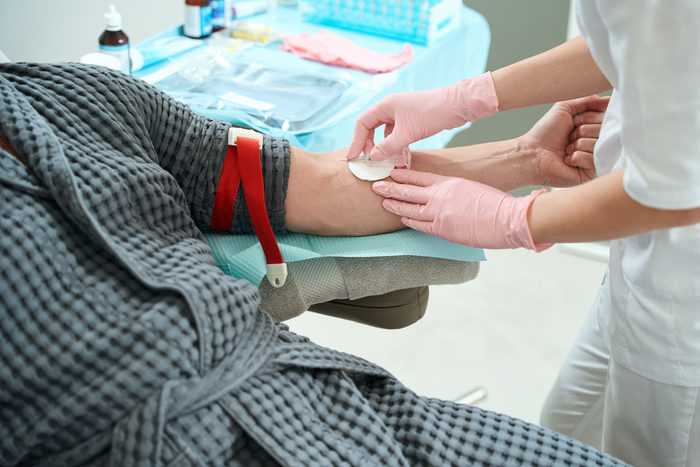
Blood Tests Inflammatory Markers
How Your Blood Work Speaks About You…
Your doctor orders a blood test and you go to have it done. Do you have any idea what was ordered and why? Have they ordered everything that should have been ordered or not? You may never know unless you are prepared to ask certain questions.
First; what is it you are suffering from? Is anything at all? But understand that every illness starts from an inflammatory response. Inflammation is the key to all diseases.
If we can control or eliminate inflammation, we can then prevent or reverse illness.
Your typical blood tests reveal many hidden things happening within your body. But a few key and not usually ordered tests can tell so much more.
If you are a cardiac or auto immune patient, you deserve to know about your most telling inflammatory markers. Which are they?
There are a few but primarily consider these three as they will provide a very wide knowledge of total systemic inflammation.
C-Reactive Protein (CRP): Target levels < 1.0
C-reactive protein (CRP) is a protein produced by the liver that increases in response to inflammation in the body. It is commonly measured through a blood test to help diagnose and monitor various inflammatory conditions and infections.
Myeloperoxidase (MPO): Target levels < 360
Myeloperoxidase (MPO) is an enzyme found in neutrophils, a type of white blood cell, that helps the immune system fight infections by producing antimicrobial substances. It plays a critical role in the body’s first line of defense against pathogens and is linked to various health conditions when its levels are abnormal.
Lp-PLA2 (called the PLAC Test) Target levels < 225
The PLAC test is a blood test used to measure serum activity of lipoprotein-associated phospholipase A2 (Lp-PLA2), an enzyme that breaks down oxidized low-density lipoprotein in the vascular wall. Higher levels of Lp-PLA2 activity are thought to promote atherosclerotic plaque formation.1 The PLAC test was approved by the U.S. Food and Drug Administration for this indication in 2014.
How does this affect you regarding dentistry? There are direct and indirect correlations between Coronary Arterial disease, higher Stroke incidence and Periodontal Disease.
Studies have shown and proven that maintaining proper Periodontal health can lessen your chances of having one of these life threatening conditions by over 50%.
A properly treated periodontal condition can see marked drops in all these inflammatory markers, even on patients that are believed to NOT have a periodontal condition by your traditional dentists.
Dentists and hygienists alike are trained to diagnose based on proven markers such as bleeding, plaque and calculus accumulation, inflamed gums etc.… Although these are real symptoms and visual markers, many times the real culprit is not visible. Hiding in very small crevices like the Taliban. They may be hiding in ill fitting crown margins, or a cracked tooth or filling. Could be a combination of gut and oral reflux.
What can be done to improve these inflammatory markers and your chances to live a longer and healthier life?
1. Visit a qualified dentist regularly.
2. Have the proper blood tests performed ahead of time by a trained cardiovascular physician.
3. Have proper dental examination and periodontal treatments, preferably by a Bale and Doneen trained dentist. They have a better understanding of how all these markers relate and how best to treat them.
For a list of B&D trained practitioners in your area, visit: https://baledoneen.com/find-a-provider/
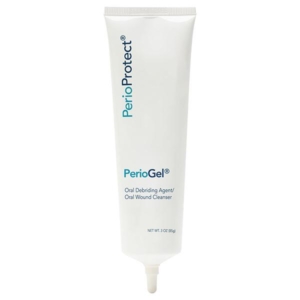
4. Consider having a set of Perio Protect trays made for daily use. They are a first line of defense against bacterial build up. www.PerioProtect.com
*See Below for additional information of the Perio Protect proprietary system.
5. Using the correct mouthrinse and not those typical TV rinses that are just full of toxins. Visit: https://iotechinternational.com/

Restore Structure and Relieve Hypersensitivity:
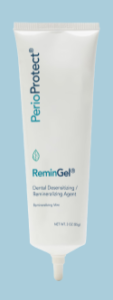
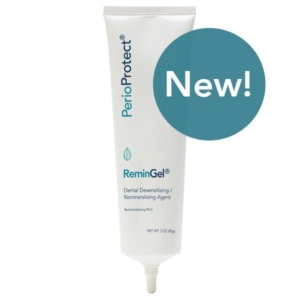
A White Paper on ReminGel™
Introduction
Dentin hypersensitivity affects a significant portion of the population, often resulting from exposed dentinal tubules due to erosion, abrasion, or caries. Traditional treatments include fluoride-based agents but concerns over fluorosis and biocompatibility have led to the exploration
of alternatives such as hydroxyapatite (HAp) and calcium phosphate-based compounds. ReminGel represents a fluoride-free solution designed to restore enamel structure and relieve hypersensitivity through a multi-ion delivery system.
Composition and Mechanism of Action
ReminGel contains:
- Hydroxyapatite (HAp): A biomimetic mineral that binds to damaged enamel and fills microscopic gaps (Naim & Sen, 2025; Li et al., 2008).
- Hydroxyapatite precursors (Monetite and Brushite): Promote faster
nucleation and deeper mineralization (Cabreįos-Azama, J, et al., 2014; Boanini et al., 2022; Tang, H., et al. 2021).
- Free calcium, phosphate, and potassium ions: Penetrate dentinal tubules and facilitate remineralization and nerve desensitization (da Silva et al., 2023; Orchardson & Gillam, 2000).
ReminGel operates across a wide pH range, enabling remineralization even in acidic oral environments. Potassium ions diffuse into dentinal tubules, reducing nerve excitability, thereby alleviating sensitivity.
Verification and Validation Evidence from ReminGel
- Laser Confocal Microscopy Analysis: Two-dimensional laser confocal microscopy of demineralized hydroxyapatite discs treated with ReminGel revealed prominent surface peaks, indicating the formation of a new hydroxyapatite layer (VistaApex Solutions, Internal, Data on file).
Dentin Tubule Occlusion Study: After seven 15-minute applications of ReminGel, exposed dentin tubules were fully occluded, effectively blocking fluid movement to provide significant relief from dentinal hypersensitivity (VistaApex Solutions, Internal, Data on file). Studies show that the remineralization agents in ReminGel, specifically hydroxyapatite precursor compounds promote deep mineral deposition, enhance acid resistance, and provide long-lasting relief from dentinal hypersensitivity (Adawy & Diaz, 2022; Cabrios-Azama, J, et al., 2014; Boanini et al., 2022)
Clinical Evidence from ReminGel
White spot lesion and dentin hypersensitivity case studies demonstrate significant enamel restoration and dentinal tubule occlusion following consistent use of ReminGel. In particular, white spot lesions located near the gum line responded well to treatment when ReminGel was delivered using a
tray with a peripheral seal from PerioProtect®, which ensured prolonged contact and targeted application. The tray’s sealed design helps retain the gel in place, allowing the remineralization agents to remain in contact with the tooth surface for optimal absorption and effectiveness.
In clinical cases of hypersensitivity, patients who used ReminGel in the PerioProtect tray daily for
15 minutes reported significant relief from sensitivity within one week and almost total resolution of sensitivity by day 21. The effects have sustained for up to six months and showed signs of becoming permanent, with no recurrence reported during follow-up evaluations.
Biocompatibility of ReminGel
ReminGel is FDA 510(k) cleared, confirming that it has successfully met all required biocompatibility standards in accordance with ISO 10993 (Biological Evaluation of Medical Devices) and ISO 7405 (Evaluation of Biocompatibility of Dental Devices).
Supporting Literature
- Hydroxyapatite-Based Remineralization: Hydroxyapatite has shown comparable efficacy to fluoride in caries prevention and superior performance in managing hypersensitivity and molar–incisor hypomineralization (MIH). It is especially beneficial for children and individuals at risk of fluoride overexposure (Naim & Sen, 2025).
- Hydroxyapatite Precursors: Monetite and Brushite: Monetite and brushite, key precursors to hydroxyapatite, have demonstrated effective dentinal tubule occlusion and remineralization. Their incorporation into oral care formulations enhances acid resistance and promotes deeper mineral deposition, contributing to long-term sensitivity relief. These compounds also play a critical role in the nucleation process of hydroxyapatite, initiating mineral formation from amorphous calcium phosphate phases under controlled pH conditions. Brushite nucleates rapidly at lower pH, while monetite forms through thermal dehydration and contributes to sustained mineralization
(Dosen & Giese, 2011; Cama et al., 2013).
Potassium Ions in Desensitization: Potassium salts, such as potassium nitrate, are effective in reducing dentin hypersensitivity by depolarizing nerve endings. Clinical trials confirm their efficacy in both toothpaste and mouthwash formulations (da Silva et al., 2023; Orchardson & Gillam, 2000).
Discussion
ReminGel leverages a synergistic combination of remineralizing and desensitizing agents. Its ability to occlude dentinal tubules and restore enamel structure without fluoride positions it as a promising alternative in restorative and therapeutic dentistry. The integration of hydroxyapatite and calcium phosphate compounds aligns with current trends in biomimetic dental care.
When paired with an enamel matrix regeneration treatment, ReminGel may enhance overall remineralization outcomes by supporting both surface and subsurface repair.
Deep delivery of ReminGel with the PerioProtect Tray provides sustained contact on the tooth and exposed root surfaces and along the gumline.
Conclusions of entire blog article:
Visit your dentist & hygienist regularly. Ask then if they are Bale & Doneen Preceptorship trained and also verify their status on the Bale & Doneen site: https://baledoneen.com/find-a-provider/
If you have bene developing white enamel marks along your gum line due to sipping drinks all day, poor habits, this Perio Protect system is a very good choice to prolong the health of your teeth and contribute to better overall cardiac health.
Ask you dental provider about this product and other options that may be available to you.
Conclusion
ReminGel offers a clinically validated, biocompatible solution for managing hypersensitivity and promoting remineralization. Supported by peer-reviewed evidence, its multi-ion composition and delivery system make it a valuable addition to modern dental therapeutics.
References
- Adawy, A., & Diaz, R. (2022). Probing the structure, cytocompatibility, and antimicrobial efficacy of silver-, strontium-, and zinc-doped monetite. ACS Applied Bio Materials, 5(4), 1648–1657. https://doi.org/10.1021/acsabm.2c00047
- Boanini, E., Pagani, S., Tschon, M., Rubini, K., Fini, M., & Bigi, A. (2022). Monetite vs. brushite: Different influences on bone cell response modulated by strontium functionalization. Journal of Functional Biomaterials, 13(2), 65. https://doi.org/10.3390/jfb13020065
- Cama, G., Gatti, R., & Bruni, G. (2013). Monetite promoting effect of NaCl on brushite cement setting kinetics.
Journal of Materials Chemistry B, 1(23), 3245–3252. https://doi.org/10.1039/C3TB20130A
- Cabrejos-Azama, J., Alkhraisat, M. H., Rueda, C., Torres, J., Blanco, L., & López-Cabarcos, E. (2014). Magnesium substitution in brushite cements for enhanced bone tissue regeneration. Materials Science and Engineering: C, 43, 403–410. https://doi.org/10.1016/j.msec.2014.06.036
- da Silva, A. R. J., de Oliveira, M. T., & de Souza, M. L. (2023). Clinical efficacy of mouthwashes with potassium salts in the treatment of dentinal hypersensitivity: A systematic review and meta-analysis. Operative Dentistry, 48(1), 33–50. https://doi.org/10.2341/21-181-LIT
- Dosen, A., & Giese, R. F. (2011). Thermal decomposition of brushite, CaHPO4·2H2O to monetite CaHPO4 and the formation of an amorphous phase. American Mineralogist, 96(2–3), 368–373. https://www.degruyterbrill.com/ document/doi/10.2138/am.2011.3544/html
- Li, L., Pan, H., Tao, J., Xu, X., Mao, C., Gu, X., & Tang, R. (2008). Repair of enamel by using hydroxyapatite nanoparticles as the building blocks. Journal of Materials Chemistry, 18(34), 4079–4084. https://doi.org/10.1039/B806090H
- Naim, J., & Sen, S. (2025). The remineralizing and desensitizing potential of hydroxyapatite in dentistry: A narrative review of recent clinical evidence. Journal of Functional Biomaterials, 16(9), 325. https://doi.org/10.3390/jfb16090325
- Orchardson, R., & Gillam, D. G. (2000). The efficacy of potassium salts as agents for treating dentin hypersensitivity.
Journal of Orofacial Pain, 14(1), 9–19. https://pubmed.ncbi.nlm.nih.gov/11203743/
- Tang, H., et al. (2021). Occluding dentin tubules with monetite paste in vitro. West China Journal of Stomatology, 39(6), 667–674. https://pubmed.ncbi.nlm.nih.gov/34859626/




Leave a Reply
Want to join the discussion?Feel free to contribute!