
The Hidden Metal in Your Mouth: Why Safe Mercury Amalgam Removal Protects Your Whole Body
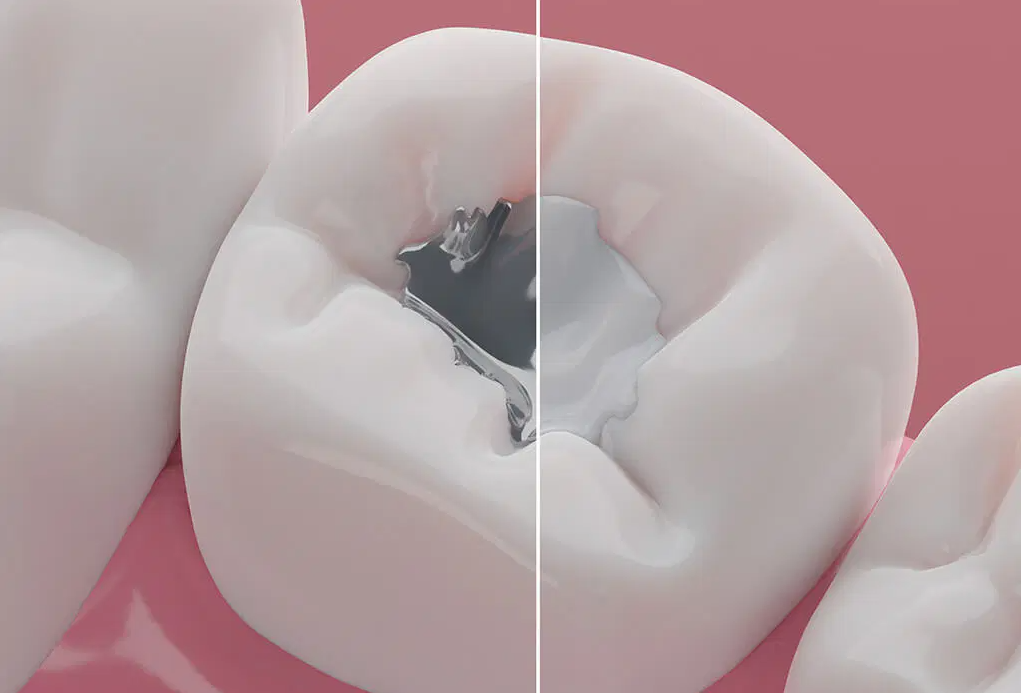
If you have older “silver” fillings, here is something most people never hear at a routine dental visit: those fillings are not actually silver. A traditional dental amalgam filling is roughly 50% mercury by weight, bound together with a powdered alloy of silver, tin, and copper. The silver-gray color is what gave them their friendly nickname — but the heaviest ingredient in the mix is one of the most studied toxic metals on earth.
At Smilecreator of Alabama, our holistic and biological approach starts from a simple idea: what goes into your body — and what we drill out of it — should support your health, not work against it. That philosophy is exactly why how an amalgam filling is removed matters just as much as whether it should be removed at all.
What “Silver” Fillings Really Are
Dental amalgam has been used for more than 150 years because it is cheap, fast, and durable. For decades it was simply marketed as a “silver filling,” a name that quietly leaves out the mercury. In 2020, the U.S. Food and Drug Administration even advised dentists to stop calling amalgam “silver-colored fillings” and to describe them accurately as mercury-containing.
The important point is not that the filling sits in your tooth — it’s that amalgam is not inert. Research recognized by the FDA and the International Academy of Oral Medicine and Toxicology (IAOMT) shows that amalgam fillings release small amounts of mercury vapor over time, and that release increases during chewing, teeth grinding, brushing, and especially during the placement or removal of the filling. For a single healthy filling in a healthy adult, that exposure is low. But mercury is a metal the body never truly needs, and biological dentistry takes a “less is better” view of any unnecessary toxic load.
The Oral–Systemic Connection: Your Mouth Is Not Separate From Your Body
If you’ve read our blog before, you already know our recurring theme: the mouth is a gateway to the rest of the body, not an isolated zone. We’ve explored how gum disease can quietly affect your overall health, how TMJ problems ripple outward, and how straighter teeth can mean a healthier body.
Mercury fits the same story. Holistic dentists view the body as a connected, balanced system — even, in many traditions, as an energy field carrying its own electrical charges. From that perspective, placing reactive metals in the mouth can be one more variable the body has to manage. Whenever possible, we prefer non-metallic, biocompatible materials that don’t introduce that variable in the first place.
To be clear and honest: mainstream dental organizations consider amalgam acceptable for most adults, and the science on low-level exposure is still debated. What is not debated is that mercury is toxic, that amalgam releases it, and that certain people are more vulnerable than others. That’s where careful, individualized decisions come in.
Who Should Be Especially Cautious About Mercury Fillings?
In its 2020 safety communication, the FDA recommended that several higher-risk groups avoid getting new amalgam fillings whenever possible and appropriate. Those groups include:
- Pregnant women and their developing babies
- Women who are planning to become pregnant
- Nursing mothers and their infants
- Children, especially those younger than six
- People with pre-existing neurological conditions such as MS, Alzheimer’s, or Parkinson’s disease
- People with impaired kidney function
- People with a known allergy or heightened sensitivity to mercury or other amalgam components
If you fall into one of these categories, it’s worth a conversation about your existing fillings and what materials make sense for you going forward.
Why How You Remove Amalgam Matters
Here’s a critical detail that surprises many patients: the single moment a mercury filling releases the most vapor and fine particulate is when it is being drilled out. Removing amalgam carelessly — without proper protection — can actually expose you, the dental team, and the environment to more mercury than simply leaving the filling alone.
This is the heart of biological dentistry. Removing mercury fillings is not inherently “safe” just because they’re coming out. It’s only safe when it’s done with the right protocol. Choosing a dentist who removes amalgam casually, with no special precautions, can defeat the entire purpose.
Inside the SMART Protocol for Safe Mercury Amalgam Removal
To address this exact problem, the IAOMT developed the Safe Mercury Amalgam Removal Technique (SMART) — a rigorous, science-based set of safeguards that go far beyond ordinary drilling. The protocol layers multiple protective measures so that mercury vapor and particles are captured and contained instead of inhaled or swallowed. Key elements include:
- A protective rubber dam to isolate the tooth and keep debris out of your mouth and airway
- High-volume suction positioned to capture vapor and particulate right at the source
- Copious water irrigation to cool the filling and reduce vapor release while drilling
- Supplemental air or oxygen delivered through a nasal mask so you breathe clean air, not chairside vapor
- Mercury-rated protective barriers for the dental team and room air filtration to clear the environment
- An amalgam separator that collects mercury waste so it never enters the water system
At Smilecreator of Alabama, our biological practice also draws on supportive tools we use throughout our holistic work — including medical-grade ozone to disinfect the site and activated charcoal, which helps bind and block stray metal particles during removal. Combined with specialized suction and vacuum devices, these measures help keep our patients, our team, and our planet cleaner during the process.
What Happens After Your Fillings Come Out
Removal is only half the job. Once a mercury filling is out, the tooth needs a strong, natural-looking, biocompatible restoration — typically a tooth-colored composite, or in larger cases a crown or onlay chosen for both durability and compatibility with your body. Because we use advanced digital dental technology, these restorations can be designed to fit precisely and blend seamlessly with your smile.
Many holistic patients also appreciate that we think beyond the chair — supporting healing with good nutrition, quality vitamins and minerals, pH-balanced hydration, and coordination with your other healthcare providers when appropriate.
Should You Have Your Amalgam Fillings Removed?
This is where honesty matters more than hype. Biological dentistry does not mean ripping out every filling you own. As a safety precaution, the IAOMT specifically advises against removing amalgam fillings during pregnancy or breastfeeding, because removal itself temporarily raises mercury exposure.
The right answer depends on you: whether a filling is failing, cracked, or leaking; whether you’re in a higher-risk group; whether you have symptoms or sensitivities; and what your personal health goals are. A thoughtful biological dentist will help you weigh these factors instead of pressuring you into a one-size-fits-all decision. The goal is the safest path for your body — which sometimes means replacing fillings, and sometimes means leaving healthy ones in place.
A Biological Approach, Right Here Near Lake Martin
Finding a dentist who removes mercury fillings safely — with a true protocol rather than a regular drill — can be surprisingly difficult. For patients across the Lake Martin region and beyond, Smilecreator of Alabama offers that option close to home. Dr. Nilo Hernandez has practiced dentistry since 1991 and built his Dadeville practice around holistic, whole-body care, advanced digital technology, and a genuinely gentle chairside manner that puts even anxious patients at ease.
If those old silver fillings have been on your mind, you don’t have to guess. Let’s look at them together and build a plan that fits your health, your timeline, and your goals.
Frequently Asked Questions
Are mercury amalgam fillings dangerous? A single intact filling exposes most healthy adults to low mercury levels. However, mercury is toxic, amalgam releases vapor over time, and the FDA recommends that certain higher-risk groups avoid it. Many patients simply prefer mercury-free, biocompatible alternatives.
Is it safe to remove mercury fillings? It can be — but only with proper precautions. Removal releases more vapor than a filling does while sitting in the tooth, which is why the SMART protocol exists. Casual removal without safeguards can increase your exposure.
What is the SMART protocol? SMART (Safe Mercury Amalgam Removal Technique) is the IAOMT’s evidence-based set of protective measures — rubber dam isolation, high-volume suction, water irrigation, clean supplemental air, filtration, and amalgam separators — designed to minimize mercury exposure during removal.
Do I have to replace all my fillings at once? No. Removal is individualized. We consider which fillings are failing, your health profile, and your priorities, then plan accordingly. Pregnant or breastfeeding patients should generally postpone elective removal.
Where can I get safe amalgam removal near Dadeville, AL? Smilecreator of Alabama provides biological, whole-body dental care — including safe mercury amalgam removal — in Dadeville, convenient to the entire Lake Martin area.
Ready to talk about your fillings?
📍 Smilecreator of Alabama — 5958 AL-49 Unit C, Dadeville, AL 36853 📞 256-373-8333 (after hours: 208-646-1464) ✉️ info@smilecreator.com 🕘 Monday–Thursday, 9:00 AM – 5:00 PM
👉 Request an Appointment and ask about safe mercury amalgam removal and our biological approach to whole-body dental care.
Medical disclaimer: This article is for general educational purposes and does not replace personalized advice from a licensed dentist or physician. Decisions about amalgam removal should be made in consultation with your dental and medical providers.



Leave a Reply
Want to join the discussion?Feel free to contribute!