
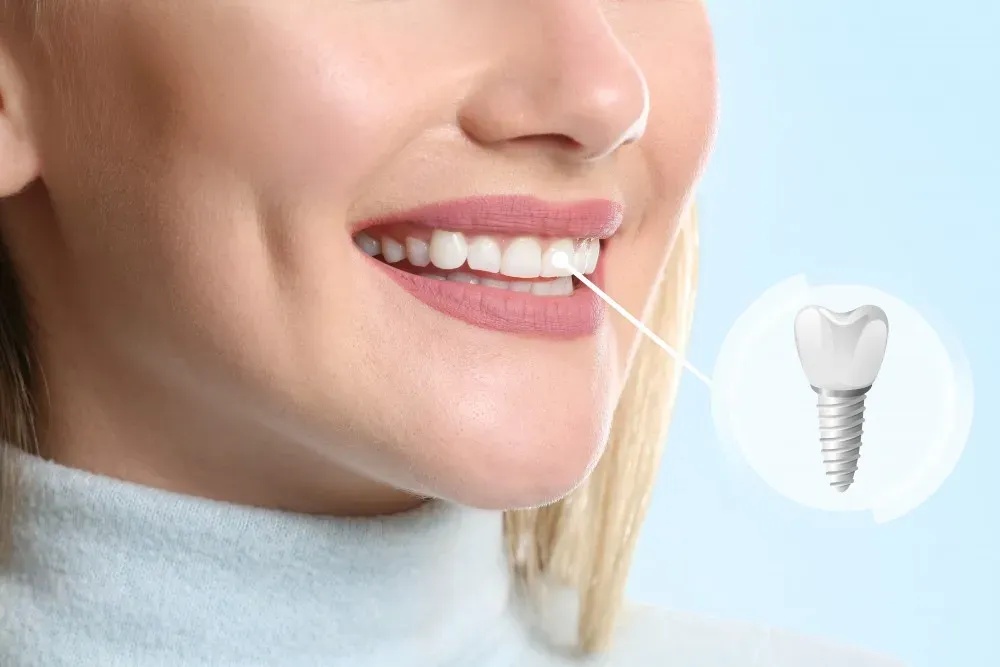
Metal-Free, Naturally: Are Zirconia Dental Implants the Right Choice for Your Body?
Replacing a missing tooth is about far more than filling a gap. A dental implant becomes a permanent part of you — placed in your jawbone, surrounded by living tissue, and (ideally) staying there for the rest of your life. So it’s fair to ask a question most patients are never offered: what should that permanent part of you be made of?
For decades the default answer has been titanium. But there’s now a metal-free alternative that fits naturally with how we practice at Smilecreator of Alabama: zirconia dental implants. As a holistic and biological dental office, we believe whatever we place in your body should work with it — so let’s look honestly at both materials and who each one suits best.
Two Ways to Replace a Tooth Root
Every dental implant does the same basic job: a small post is placed in the jaw to act as a new tooth root, and over a few months the bone fuses to it in a process called osseointegration. A crown is then attached on top. The difference comes down to what that post is made of.
- Titanium implants are the long-standing standard — a strong, lightweight metal alloy used in implant dentistry for over 50 years.
- Zirconia implants are made from zirconium dioxide, a high-strength white ceramic. They’re often called “ceramic” or “metal-free” implants and have grown in popularity among patients seeking a more biocompatible, natural-looking option.
Both are FDA-cleared, and both achieve excellent success rates — studies generally report figures in the range of 94–98% over roughly ten years for well-placed implants of either material. So this isn’t a story of “good vs. bad.” It’s a story of fit.
What Makes Zirconia a “Biological” Choice
If you’ve read our biological dentistry philosophy, you know one of our guiding principles: holistic dentists prefer non-metallic materials so as not to disrupt the body’s natural balance and electrical charge. Zirconia lines up with that thinking in several concrete ways:
- Completely metal-free. Zirconia contains no metal alloy, which appeals to patients who want to minimize the metals placed in their body — and to the roughly fewer-than-1% of people with a genuine titanium or metal sensitivity.
- Excellent biocompatibility. Research consistently shows favorable tissue response and reliable integration with bone. The body tends to accept zirconia readily, with minimal inflammatory reaction.
- Non-conductive and corrosion-free. Because it’s a ceramic, zirconia doesn’t conduct electricity and isn’t subject to the galvanic currents or corrosion that some biological dentists associate with mixing metals in the mouth.
- Lower bacterial adhesion. Zirconia’s smooth surface appears to resist bacterial buildup, which may help support healthy gum tissue around the implant and reduce the risk of peri-implant inflammation.
- Beautifully natural aesthetics. Zirconia is tooth-colored white rather than gray. That matters most at the gumline and in the front of the mouth, where a thin or receding gum can let a darker titanium post show through as a faint shadow.
This is exactly the kind of “work with the body” reasoning that drew many of our patients to biological dentistry in the first place — the same thinking behind safe, mercury-free restorations and biocompatible materials throughout the mouth.
The Honest Case for Titanium
A trustworthy comparison has to give titanium its due — and it deserves plenty. Titanium remains the gold standard in implant dentistry for good reasons:
- Decades of proven data. With 50+ years of clinical use and the lion’s share of implants placed worldwide, titanium has the deepest track record of any implant material.
- Exceptional strength and flexibility. Titanium’s mechanical properties make it extremely reliable for heavy load-bearing areas, such as back molars that endure powerful chewing forces.
- Restorative versatility. Titanium implants are commonly two-piece systems, giving the dentist more flexibility to angle and position the final crown — useful in complex cases.
By contrast, zirconia is a newer option, so its very-long-term data is still maturing. Many zirconia implants are one-piece designs (which has both pros and cons), they can cost somewhat more, and they may call for careful case selection. For most patients, titanium is a safe, excellent, well-understood choice — and an honest biological dentist will say so.
Zirconia vs. Titanium at a Glance
| Consideration | Zirconia (Ceramic) | Titanium (Metal) |
| Material | Metal-free ceramic (zirconium dioxide) | Titanium metal alloy |
| Biocompatibility | Excellent; metal-free, hypoallergenic | Excellent; very well tolerated |
| Aesthetics | Tooth-colored white; no gray shadow at gumline | Gray metal; can show through thin gums |
| Track record | Strong and growing; long-term data still maturing | 50+ years; deepest evidence base |
| Strength | High; well-suited to most cases | Very high; ideal for heavy load-bearing |
| Corrosion / galvanic effects | None (non-metallic, non-conductive) | Possible corrosion concerns over time |
| Bacterial adhesion | Lower (smooth ceramic surface) | Slightly higher |
| Typical cost | Often somewhat higher | Often more economical |
| Best for | Metal-free seekers, metal sensitivity, front-of-mouth aesthetics, holistic preference | Complex/load-heavy cases, maximum proven longevity |
Individual results vary; this table is a general guide, not a treatment recommendation.
Who Tends to Choose Metal-Free Implants?
There’s no universal “winner” — but patients often lean toward zirconia when they:
- Prefer a metal-free, holistic approach to their overall health
- Have a known metal sensitivity or simply want to avoid added metals
- Are replacing a front tooth where aesthetics and gumline appearance matter most
- Have thin or translucent gum tissue that could reveal a gray titanium shadow
- Value lower bacterial adhesion for long-term gum health around the implant
It’s Not Either/Or — It’s Individualized
Here’s the key takeaway: the best implant material is the one that fits your mouth, your health history, and your goals. The right choice depends on which tooth is being replaced, the chewing forces it must handle, your bone quality, your aesthetic priorities, any sensitivities, and your personal philosophy about what goes into your body.
That’s a conversation, not a default. Our role is to lay out the real trade-offs and help you choose with clear information — never to push one material for everyone.
Implants and Whole-Body Health
Regular readers know our recurring theme: the mouth is connected to the rest of the body. With implants, that connection is literal — the post lives inside your jawbone and integrates with living tissue. A few whole-body points worth knowing:
- A healthy foundation matters. Successful integration depends on healthy bone at the site. That’s one reason our biological approach pays close attention to the health of the jawbone before placing an implant.
- Replacing teeth protects more than your smile. Missing teeth allow neighboring teeth to shift and the jawbone to shrink over time. A well-placed implant helps preserve bite function and facial structure.
- Materials are part of the bigger picture. Choosing biocompatible materials throughout the mouth — implants included — fits the same philosophy that guides everything we do, supported by advanced digital dental technology for precise planning and placement.
Exploring Metal-Free Implants Near Lake Martin
If you’ve been searching for a dentist who will actually talk through metal-free options instead of defaulting to one material, you’ll find that conversation at Smilecreator of Alabama. Dr. Nilo Hernandez has practiced dentistry since 1991 with a strong focus on placing and restoring dental implants using advanced digital technology — all within a holistic, whole-body philosophy and a famously gentle chairside manner.
Whether zirconia, titanium, or another path turns out to be right for you, the goal is the same: a confident, functional smile chosen with full information.
Frequently Asked Questions
What are zirconia dental implants? They’re metal-free dental implants made from zirconium dioxide, a strong white ceramic. They serve the same function as titanium implants — acting as an artificial tooth root — but contain no metal and offer a tooth-colored, biocompatible alternative.
Are zirconia implants as strong as titanium? Zirconia is a high-strength ceramic that performs well for most cases. Titanium still holds an edge in mechanical strength and flexibility for the heaviest load-bearing situations, and it has a longer track record. Both achieve high long-term success rates.
Are metal-free implants better for your health? For most people, both materials are safe and well tolerated. Zirconia is appealing to patients who prefer a metal-free, holistic approach, who have metal sensitivities, or who want to avoid corrosion and galvanic effects. The best choice is individualized.
Do zirconia implants cost more than titanium? Often, yes — zirconia implants tend to cost somewhat more than titanium. The right value depends on your specific case, aesthetics, and priorities, which we’re happy to review with you.
Where can I get zirconia (metal-free) implants near Dadeville, AL? Smilecreator of Alabama offers biological, whole-body implant dentistry — including metal-free options — in Dadeville, convenient to the entire Lake Martin area.
Ready to talk through your tooth-replacement options?
📍 Smilecreator of Alabama — 5958 AL-49 Unit C, Dadeville, AL 36853 📞 256-373-8333 (after hours: 208-646-1464) ✉️ info@smilecreator.com 🕘 Monday–Thursday, 9:00 AM – 5:00 PM
👉 Request an Appointment and ask about zirconia and metal-free dental implant options.
Medical disclaimer: This article is for general educational purposes and does not replace personalized advice from a licensed dentist. Implant material selection is individualized, and any discussion of biocompatibility, corrosion, galvanic effects, or systemic considerations reflects evolving evidence and clinical perspectives — not universal fact for every patient. Discuss your options with a qualified provider after an individual examination.




Leave a Reply
Want to join the discussion?Feel free to contribute!