

The Power of Oxygen: How Ozone Therapy Supports Cleaner, More Natural Dentistry
If you’ve ever had dental work at a conventional office, you’re used to a familiar toolkit: the drill, the filling, and sometimes antibiotics or harsh chemical disinfectants. At a biological, holistic dental practice, there’s an additional tool you may not have encountered — one based on something as fundamental as oxygen.
It’s called ozone therapy, and it’s one of the quiet workhorses behind much of what we do at Smilecreator of Alabama. From disinfecting a tooth before a filling to supporting healing after a surgical procedure, ozone helps us work more gently, more naturally, and with less reliance on aggressive chemicals. Here’s what it is, how we use it, and an honest look at what the science does — and doesn’t — say.
What Is Ozone, and Why Use It in the Mouth?
You already know oxygen as O₂ — the two-atom molecule you breathe. Ozone is O₃, a more energetic, three-atom form of oxygen. That extra atom makes ozone a powerful oxidizer, which is exactly why it’s so useful against germs.
When ozone contacts bacteria, viruses, and fungi, it disrupts their cell walls and membranes, effectively breaking them down. Importantly, it does this without the harsh side effects of many chemical agents, and research shows it’s effective against a wide range of oral microorganisms — both the Gram-positive and Gram-negative kinds, plus yeasts like Candida. In the mouth, that translates into a clean, biocompatible way to disinfect tissues and support the body’s own healing.
The Three Forms of Dental Ozone
One reason ozone is so versatile is that we can deliver it in three different forms, each suited to a different job:
- Ozone gas (O₃/O₂): Generated chairside and applied to a specific area — like a prepared cavity, a root canal space, or an extraction socket — to disinfect deep into tissue that brushing and rinsing can’t reach.
- Ozonated water: Clean water infused with ozone right before use. It’s an excellent rinse and irrigation solution for cleansing wounds, flushing sockets, controlling minor bleeding, and supporting gum health — and it’s considered one of the safest, most practical ways to use ozone.
- Ozonated oils: Naturally derived oils (such as ozonated olive oil) that can carry ozone’s benefits and penetrate into gum tissues for slower, sustained contact.
How We Use Ozone at Smilecreator of Alabama
Ozone shows up across many of our biological procedures. A few of the most common ways we put it to work:
- Disinfecting cavities before fillings. After removing decay, a quick ozone treatment helps reduce remaining bacteria in the tooth before we place a biocompatible restoration — a more thorough, conservative clean.
- Supporting extraction and surgical sites. Following an extraction or oral surgery, ozone helps disinfect the socket, increase local oxygen, and encourage cleaner healing.
- Treating jawbone cavitations. As we describe in our article on jawbone cavitations (NICO), medical-grade ozone is a key step in disinfecting these hidden bone lesions after they’re cleaned out.
- During mercury amalgam removal. Ozone is part of our toolkit for safely removing old mercury fillings and disinfecting the area afterward.
- Gum health and rinses. Ozonated water can be used to irrigate periodontal pockets and rinse the oral cavity as part of supporting healthier gums.
The common thread is simple: wherever we can disinfect and support healing with oxygen instead of harsher alternatives, we’d rather do that.
The Benefits Patients Tend to Appreciate
Patients drawn to a holistic approach often value ozone therapy because it’s:
- Gentle and conservative — it works with the body’s healing instead of against it
- Broadly antimicrobial — effective against bacteria, viruses, and fungi
- Supportive of healing — by boosting local oxygen, which plays a role in collagen formation, new blood-vessel growth, and tissue repair
- Chemical-sparing — reducing the need for some harsher disinfectants
- Well-tolerated — without introducing materials the body has to “manage”
An Honest Look at the Evidence
A “perfect” article doesn’t overpromise — and ozone therapy is a topic where honesty matters. Here’s the balanced picture:
The strongest support for ozone is as a disinfectant and adjunct (helper) therapy. Studies show ozone can meaningfully reduce bacteria — in some research, gaseous ozone performed comparably to chlorhexidine for disinfecting cavities after incomplete decay removal — and ozone use in root canal procedures has been associated with reduced post-treatment pain. Ozonated water is well regarded for wound cleansing and healing support.
Where the evidence is weaker is the bigger claim that ozone alone can replace the drill and reverse established cavities. A Cochrane review found no reliable evidence that simply applying ozone gas to a decayed tooth stops or reverses decay, and more recent systematic reviews echo that the certainty of evidence is low and that better-quality studies are still needed. One review also found ozone unhelpful as an add-on in certain nonsurgical gum treatments.
So here’s our honest position: we use ozone as a valuable adjunct — a disinfecting and healing-support tool that complements proven dentistry — not as a magic cure that replaces it. That’s the responsible way to use a promising therapy while the research continues to mature.
Is Ozone Therapy Safe?
Used correctly, dental ozone is well-tolerated. The key word is correctly: ozone gas should never be freely inhaled, so it’s applied to a contained, sealed area with proper suction to scavenge any excess — exactly the kind of careful technique a trained biological office uses. The equipment is specialized, and the ozone is generated fresh for each application. For the great majority of patients, ozone therapy adds comfort and cleanliness to a visit, not risk.
Who Might Benefit Most?
Ozone is a natural fit for patients who:
- Prefer a holistic, lower-chemical approach to dental care
- Are having an extraction, implant, or cavitation procedure where clean healing matters
- Want extra disinfection as part of restorative or gum care
- Simply like the idea of using oxygen-based therapy to support their body’s own healing
A More Natural Approach, Right Here Near Lake Martin
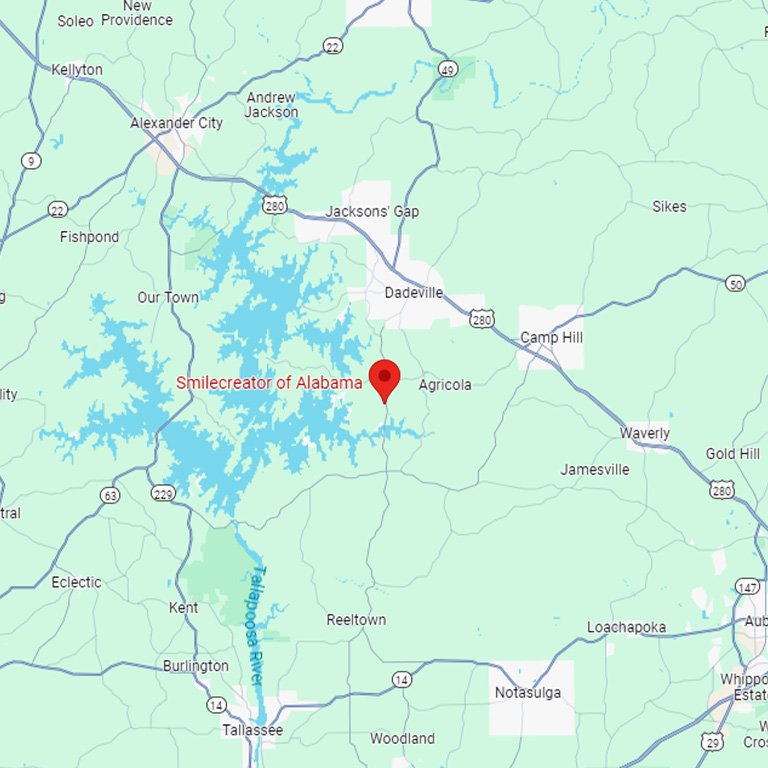
Not every dental office offers ozone therapy — it takes specialized equipment, training, and a genuinely biological philosophy. For patients across the Lake Martin region who want that more natural approach, Smilecreator of Alabama brings it close to home. Dr. Nilo Hernandez has practiced since 1991 and built his Dadeville office around whole-body, patient-first care delivered with a famously gentle touch.
Curious whether ozone therapy could be part of your next visit? Let’s talk about it.
Frequently Asked Questions
What is ozone therapy in dentistry? It’s the use of ozone — an energetic, three-atom form of oxygen (O₃) — to disinfect teeth, gums, sockets, and surgical sites and to support natural healing. It’s delivered as a gas, as ozonated water, or as ozonated oil.
Does dental ozone therapy actually work? The evidence is strongest for ozone as a disinfectant and healing aid — reducing bacteria and supporting recovery. The evidence is weaker for ozone replacing fillings to reverse cavities, which is why we use it as an adjunct alongside proven dentistry, not as a standalone cure.
Is ozone therapy safe? Yes, when performed properly. Ozone gas is applied to a contained area with suction so it isn’t inhaled, using specialized equipment. It’s well-tolerated by the vast majority of patients.
Can ozone replace drilling and fillings? Not reliably. Current research doesn’t support ozone alone as a substitute for treating established cavities. It’s best viewed as a helpful disinfecting and healing step within comprehensive care.
Where can I find ozone therapy near Dadeville, AL? Smilecreator of Alabama offers biological, whole-body dental care — including ozone therapy — in Dadeville, convenient to the entire Lake Martin area.
Interested in a more natural dental visit?
📍 Smilecreator of Alabama — 5958 AL-49 Unit C, Dadeville, AL 36853 📞 256-373-8333 (after hours: 208-646-1464) ✉️ info@smilecreator.com 🕘 Monday–Thursday, 9:00 AM – 5:00 PM
👉 Request an Appointment and ask how ozone therapy fits into our biological approach to dental care.
Medical disclaimer: This article is for general educational purposes and does not replace personalized advice from a licensed dentist. Ozone therapy is used here as an adjunct to conventional care; treatment decisions should be made after an individual examination.



Leave a Reply
Want to join the discussion?Feel free to contribute!